 KG Repair Rewards – discover how every repair can be safer, more efficient and truly rewarding!
 KG Ultra App — Powering operational excellence with KG Smart Support!


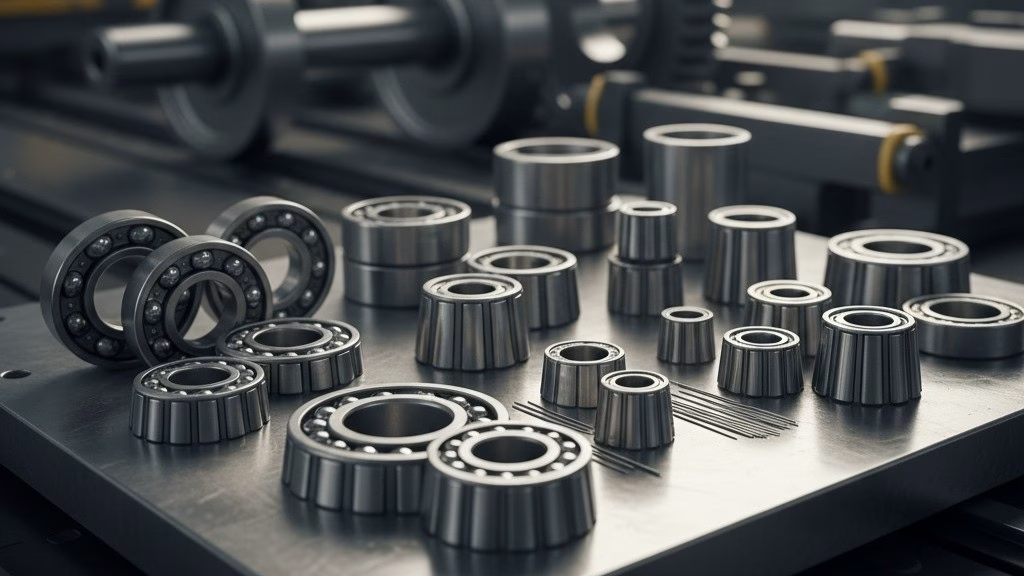
Bearings play an essential role in ensuring the performance and lifespan of machinery across various industries. They reduce friction, withstand loads, and enable smooth motion in equipment and household appliances. Poor selection or improper maintenance can result in breakdowns, operational delays, and higher costs. This article discusses the different types of bearings, key factors to consider when selecting them, and effective maintenance practices to enhance their durability.
Understanding Bearings’ Role in Optimal Machine Function
Bearings play a vital role in machinery by supporting moving parts and minimizing friction. Selecting the right bearing ensures optimal efficiency and longer lifespan, while incorrect selection or improper installation can lead to excessive heat, accelerated wear, and eventual machine failure.
How Bearings Enhance Machine Efficiency and Lifespan
Diverse bearings cater to different needs, load capacities, and working conditions. Robust bearings handle heavy loads, while low-friction types suit high-speed operations. Using the right bearings ensures efficiency by reducing energy consumption, minimizing wear, extending machinery life, and lowering maintenance or repair requirements.
Applications of Various Bearings
Bearings are essential in vehicles, aircraft, construction, appliances, and medical equipment. Selecting the wrong type can cause serious damage. High-speed motors require different bearings than those used in slow-moving conveyors, making proper selection crucial for performance and safety across various industrial and mechanical applications.
Common Bearing Types and Their Advantages
Selection is based on load, speed, and operating conditions. The following highlight the main types and their respective applications.
Ball Bearings: Versatile and Economical
- Ball Bearings: Versatile and Economical. Ball bearings are widely valued for their simplicity and efficiency, ideal for light loads and high-speed operations in motors and household appliances. They can manage both radial and axial loads but are not suitable for heavy-duty applications.
Roller Bearings: Industrial Strength and Capacity
- Roller Bearings: Industrial Strength and Capacity. Roller bearings use cylindrical rollers to increase surface contact and load capacity. Commonly used in gearboxes, conveyor belts, and heavy machinery, they perform well under shock and high-load conditions.
Thrust Bearings: Specialized Axial Support
- Designed to handle axial loads efficiently, thrust bearings are essential in automotive and aerospace systems. However, they are not meant for radial load applications.
Tapered Bearings: Dual Load Efficiency
- Tapered bearings balance radial and axial forces with their unique conical design, offering durability for hubs and large industrial equipment.
Needle Bearings: Space-Saving Strength
Needle bearings feature slender rollers that support high loads in compact areas, such as transmissions and low-speed systems.
How to Choose the Right Bearings?
Selecting the correct bearing type requires a thorough understanding of the operational conditions and performance needs of the machinery. Several key factors guide this decision.
- Load Capacity: Bearings are designed to support different types of loads—radial, axial, or a combination of both. It’s essential to choose a bearing that matches the application’s specific load requirements. For example, roller bearings are ideal for handling heavy radial loads, while thrust bearings are best suited for applications involving axial loads.
- Rotational Speed: The bearing type must correspond to the desired rotation speed to ensure smooth operation and prevent excessive heat or friction. Ball bearings are preferable for high-speed operations, whereas roller bearings perform better in low-speed, high-load settings.
- Operating Environment: The surrounding environment plays a major role in bearing performance. Bearings used in high-temperature or corrosive environments must be designed from resistant materials. In dusty or dirty areas, sealed bearings help prevent contamination and extend operational life.
- Maintenance Requirements: Maintenance needs vary by bearing type. Sealed bearings require little to no care, while others depend on regular lubrication. Proper lubrication not only reduces friction but also minimizes wear, ultimately increasing the bearing’s lifespan.
Maximizing Bearing Durability
Maximizing the durability of bearings depends on proper selection, installation, maintenance, and timely detection of wear. Each step plays a vital role in ensuring smooth operation and minimizing unexpected failures.
Proper Installation
Incorrect installation is a leading cause of bearing failure. Always use the right tools and follow recommended procedures to avoid applying excessive force or creating misalignment, which can lead to premature wear or mechanical damage.
Maintenance: Inspection and Lubrication
Routine inspection helps identify early signs of deterioration. Lubrication is equally vital, as it reduces friction and heat generation. Use lubricants suited to the specific bearing type and operational conditions. Avoid over-lubrication, as it can attract contaminants and cause performance issues.
Identifying Signs of Wear and Failure
Pay close attention to unusual noises, vibrations, or heat—all of which may signal bearing wear or impending failure. Replacing the bearing at the first sign of trouble prevents further machinery damage and downtime.
Ensuring Correct Alignment
Misaligned bearings wear unevenly, leading to stress and eventual failure. Ensure alignment between the shaft and housing to distribute loads evenly, enhance performance, and extend service life.
What to Avoid When Using Bearings?
Even when high-quality bearings are selected, improper handling or maintenance can significantly affect their performance and longevity. To ensure smooth operation, it’s important to avoid a few common errors.
- Overloading: Bearings are designed to handle specific load capacities. When subjected to excessive weight or force, they can experience premature failure, deformation, or excessive heat generation. Always ensure that the bearing is matched precisely to the application’s load requirements to maintain efficiency and reliability.
- Using the Wrong Lubricant: Incompatible or poor-quality lubricants can cause excessive friction, corrosion, or overheating, leading to bearing damage. Always follow the manufacturer’s recommendations regarding the type and quantity of lubricant to be used, and ensure it is replaced or replenished at proper intervals.
- Ignoring Operating Conditions: Bearings exposed to harsh environmental conditions such as dust, moisture, or extreme temperatures can wear out quickly. Proper sealing, protection, and monitoring are crucial to prevent contamination and ensure consistent performance.
- Skipping Regular Maintenance: Routine inspection and maintenance are essential to detect wear, misalignment, or lubrication issues early. Neglecting maintenance can result in unexpected breakdowns, costly repairs, and production downtime.
Future Trends in Bearings’ Innovation
Future innovations in bearings are focused on enhancing durability, efficiency, and performance across industries. One key advancement is the rise of hybrid bearings, which combine ceramic and steel materials to deliver superior strength and longevity. These bearings are highly resistant to wear, corrosion, and temperature fluctuations, making them ideal for demanding or extreme operating environments. Continuous research aims to improve material composition, lubrication methods, and design precision, ensuring smoother operation and reduced maintenance. As industries seek longer-lasting and more reliable components, hybrid bearings represent a major step forward in the ongoing evolution of bearing technology.
Conclusion
Selecting the right bearings maximizes performance. Consider load, speed, and conditions, while following proper installation and maintenance practices. Regular inspections and lubrication extend lifespan, reducing downtime.
KG International is a leading bearings manufacturer and supplier based in Dubai, UAE, serving MENA and Africa markets. With over 53 years of experience, they pioneered Dubai as a global bearing hub, offering high-quality KG brand bearings produced in ISO 9001 and IATF 16949 certified facilities. Their products ensure reliability, longevity (up to 80,000 km for truck solutions), and competitive pricing for automotive and industrial applications.
