 KG Repair Rewards – discover how every repair can be safer, more efficient and truly rewarding!
 KG Ultra App — Powering operational excellence with KG Smart Support!


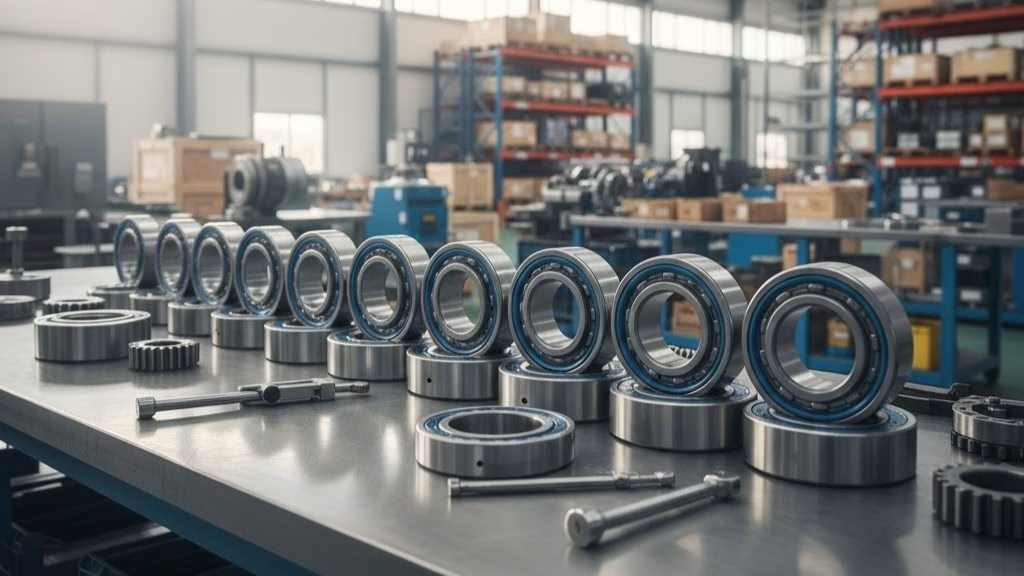
The Crucial Function of Bearings in Heavy Vehicles
Ever wondered how heavy trucks and commercial vehicles carry massive loads while still running smoothly mile after mile? The answer lies in one small but mighty component—bearings. These precision-engineered parts are the unsung heroes of heavy machinery, minimising friction, supporting enormous loads, and keeping everything moving efficiently.
In this post, we’ll break down exactly how bearings work, explore the different types used in heavy vehicles, and explain why selecting the right bearing is critical to performance, uptime, and long-term reliability.
Main Function of Bearings
At their core, bearings serve one essential purpose: reducing friction between moving parts. In heavy vehicles, this typically means managing the interaction between rotating shafts and stationary housings. Without bearings, these metal surfaces would grind directly against each other, generating intense heat, accelerating wear, and wasting significant engine energy.
The result of unmanaged friction is predictable: parts degrade faster, efficiency drops, and costly failures follow. Bearings eliminate this by enabling smooth, controlled rotation, protecting components, conserving energy, and dramatically extending the operational life of heavy-duty machinery.
Why is the Function of Bearings Crucial?
Bearings do far more than just manage friction; they’re fundamental to how heavy vehicles function at every level:
- Load support: Bearings handle both radial loads (perpendicular to the shaft) and axial loads (parallel to the shaft), keeping heavy-duty systems stable under pressure.
- Controlled motion: They enable precise rotational and linear movement, ensuring mechanical systems operate exactly as designed.
- Reduced wear: By eliminating direct metal-to-metal contact, bearings significantly extend the lifespan of surrounding components.
- Energy efficiency: Less friction means less energy wasted, directly improving fuel consumption and operational output.
- Overall performance: Smooth, consistent bearing function translates to better vehicle reliability, less downtime, and lower maintenance costs.
KG International recognizes that the correct bearings are critical for the efficiency and durability of heavy vehicles.
Different Types of Bearings and Their Functions
Many types of bearings exist, each designed for specific applications and load requirements. Here are a few common types used in heavy vehicles:
Ball Bearings
Ball bearings use spherical balls to separate the bearing races. They are great for high-speed applications and moderate loads. The function of bearings like these is suited to applications where smooth rotation is needed.
Roller Bearings
Instead of balls, roller bearings use cylindrical or tapered rollers. They can handle heavier loads than ball bearings.
- Cylindrical Roller Bearings: Good for radial loads.
- Tapered Roller Bearings: Excellent for combined radial and axial loads. Found in wheel bearings, they handle the forces from turning.
Needle Roller Bearings
These bearings use long, thin rollers. They are useful in tight spaces and can still handle substantial loads.
Thrust Bearings
Designed to support axial loads, like those found in transmissions and clutches.
Lubrication: A Vital Aspect of Bearing Function
Lubrication is essential for the function of bearings. It reduces friction, dissipates heat, and prevents corrosion. The type of lubricant (grease or oil) and lubrication method (manual or automatic) depend on the specific application. Proper lubrication extends bearing life and ensures smooth operation.

Common Bearing Problems and Solutions
Even with proper selection and maintenance, bearings can experience problems. Here are a few common issues and potential solutions:
Premature Wear
Caused by contamination, inadequate lubrication, or overloading. Solutions include improved sealing, proper lubrication practices, and using bearings with higher load ratings.
Overheating
Due to excessive friction from inadequate lubrication or damaged bearings. Check lubrication levels and inspect bearings for damage.
Noise and Vibration
Can indicate damaged bearings or improper installation. Replace damaged bearings and ensure proper alignment.
How KG International Supports Your Bearing Needs
KG International offers a comprehensive range of high-quality bearings for heavy vehicles. We understand the critical function of bearings and provide solutions that enhance performance and extend equipment life.
The Future of Bearing Technology
Bearing technology is evolving rapidly, and the latest advancements are making heavy-duty applications more reliable and efficient than ever:
- High-performance materials: Newer alloys and composites offer greater load capacity, better heat resistance, and longer service life under demanding conditions.
- Advanced lubrication systems: Synthetic lubricants and precision lubrication technologies ensure consistent performance even in extreme temperatures and high-stress environments.
- Smart bearing technology: Sensor-integrated bearings now monitor real-time conditions, enabling predictive maintenance and preventing costly unexpected failures.
KG International stays ahead of these developments to deliver bearing solutions that meet the evolving demands of modern heavy vehicle operations. If you’re looking to improve performance, reduce downtime, and extend the life of your fleet, contact KG International today to find the right bearing solution for your needs.
